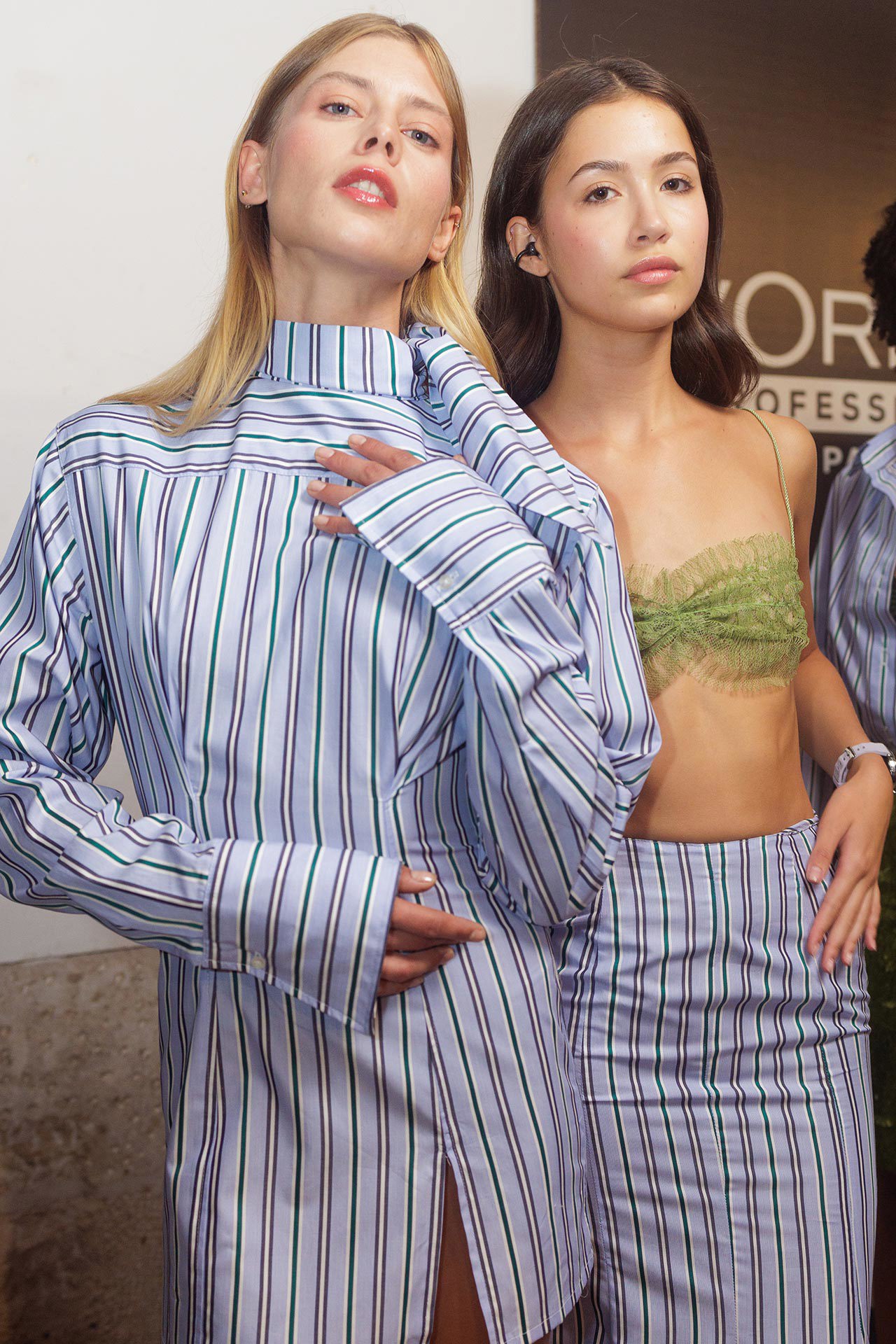
Studio Namnyak Zamia Jacket And Sanaa Skirt Patrick Maganga (1)

From Africa to Knightsbridge

Brand63Africa platforms African designers at a new pop-up in Harrods

Because It's News! | Sept 7, 2026

Following its debut at London Fashion Week earlier this year, Brand63Africa – a platform connecting African and African diasporic designers with global markets – launches a pop-up today at Harrods. Caroline Issa interviews three of the designers featured: The Cloth, Abiola Olusola and Studio Namnyak. 

By Caroline Issa Photos courtesy of Brand63Africa Cover image by Studio Namnyak

Robert Young The Cloth

Robert Young

Robert Young, creative director of The Cloth

Q: You have been weaving Caribbean history, cultural memory, and contemporary design since 1986. How do you balance the weight of this cultural storytelling with the demands of modern luxury fashion?

A: Luxury as defined by the West is a place where you find things that are interesting and try to make them yours. I don’t like the word luxury and I don’t refer to The Cloth as such. When I design, I don’t think about the international market. I think about what people would want to wear here in the Caribbean. Last week, we set up a booth at the Emancipation Village in Port of Spain. Trinidad was the first place to celebrate Emancipation and the village celebrates African Emancipation and African culture in Trinidad. The Cloth needed to be there so that we could be in Harrods. We were able to plant our feet fully in our space and let our 40-year-old relationship with the community express itself. I thank Sophie [Bufton, CEO of The Cloth] for her dedication to getting The Cloth into new markets. I thank Eva Omaghomi and Brand63Africa for making that decision to include us in the pop up. Thanks for noticing that the work is good.

Q: What does it mean for "The Cloth" to position a design language so deeply rooted in the Caribbean, within the global stage of a Harrods pop-up?

A: I come from a very radical background of trade and credit unionist who believe in the principle of “we, not I”. I have always pushed for The Cloth to be involved in coalitions with others. Right now, I am trying to engage the world with fashion from the African Diaspora. We have just set up a PanAfrican Fashion Alliance, which is a co-operative to facilitate bringing clothes to market in a manner that is opposite to how the West operates, which is usually via extraction. You can see it with Prada and the Indian slippers; it’s continuous. I am afraid that that could happen to The Cloth so I have to push back but also engage with the monster that is the global market. One of the biggest motifs in this collection is two heads facing each other. It is a confrontation between two people, but there’s also an intimacy in the confrontation: “back-to-back, belly-to-belly”, you could say.

Q: As one of the most influential Caribbean fashion houses, what recommendation would you give to someone trying to understand the evolution of "Made in the Caribbean" today?

A: Things were always made in the Caribbean; a lot of times what was made was for external consumption. The Cloth’s “made in Trinidad” labelling is important. We make things well here. But, ironically, some of this collection is not made in the Caribbean. That is part of the monster that I have to face back-to-back, belly-to-belly. This is the first time The Cloth has not been made in Trinidad. There are always challenges of scaling when you are entering a different market. There is a risk of losing something inherent. You have to be thoughtful and respectful of where the brand was born and grown, but you also have to be flexible and resilient when you respond to new environments.

Sophie Bufton, CEO at The Cloth

Q: What does it mean for The Cloth to place a design language so deeply rooted in the Caribbean on the global stage of a Harrods pop-up?

A: For The Cloth, appearing at Harrods through Brand63Africa is certainly a commercial milestone. Historical evidence points to a rich cotton culture in the Caribbean, but much of that knowledge was later disrupted after European contact. The region is still working out how to define itself and its relationship to the many influences that have shaped it. The international luxury market has long profited from Caribbean-origin commodities such as Trinitario cacao, Jamaican Blue Mountain coffee and West Indian Sea Island cotton. By bringing a Caribbean-authored design language to Harrods, thoughtfully curated and interpreted for its audience, The Cloth begins to shift that relationship. This becomes particularly tangible in our Acono Shirt, made from West Indian Sea Island cotton. Among the world’s rarest and most highly valued cottons, it has long been prized by royalty and aristocracy in Britain and beyond. To present that fibre at Harrods shows that the Caribbean need not be represented only as the source of exceptional raw material, but as the source of the ideas, design intelligence and cultural authority that give that material meaning and value. So, perhaps this is what a more equitable luxury economy might begin to look like. One pop-up cannot resolve the larger historical and economic questions involved, but it can mark the beginning of something longer term: a relationship in which Caribbean creativity and natural materials are not merely drawn upon, but properly seen, credited and invested in, with fair representation, authorship and value returned to Caribbean communities.

Q: As one of the Caribbean’s most influential fashion houses, what would you recommend to someone seeking to understand the evolution of “Made in the Caribbean” today?

A: I’d say: look beyond the Caribbean you already know. The islands may be small, but their cultural influence is anything but. That is the Caribbean revealed through The Cloth. It speaks to a new understanding of luxury: one defined not just by rarity, but by meaning, provenance, creativity, and cultural intelligence.

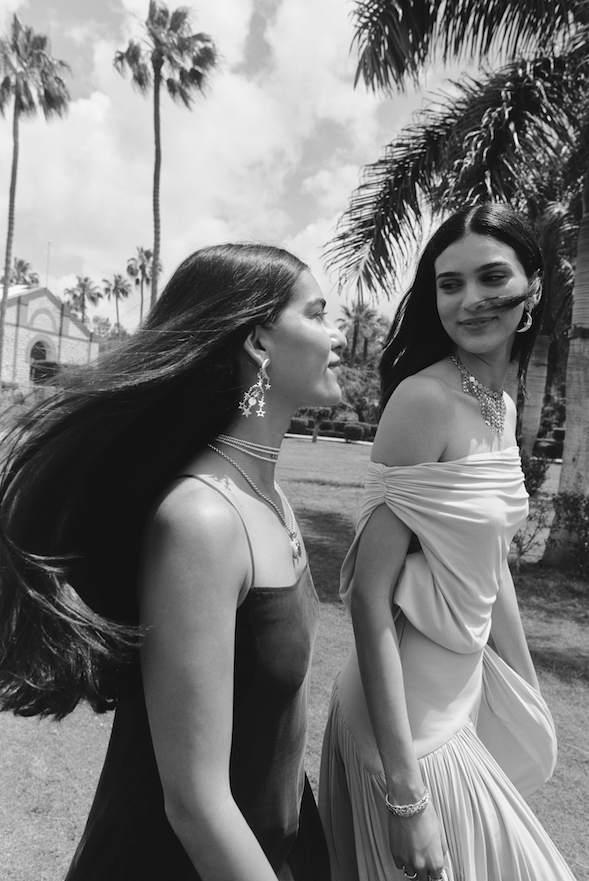
The Cloth Curepe Top Kibwe Brathwaite

The Cloth

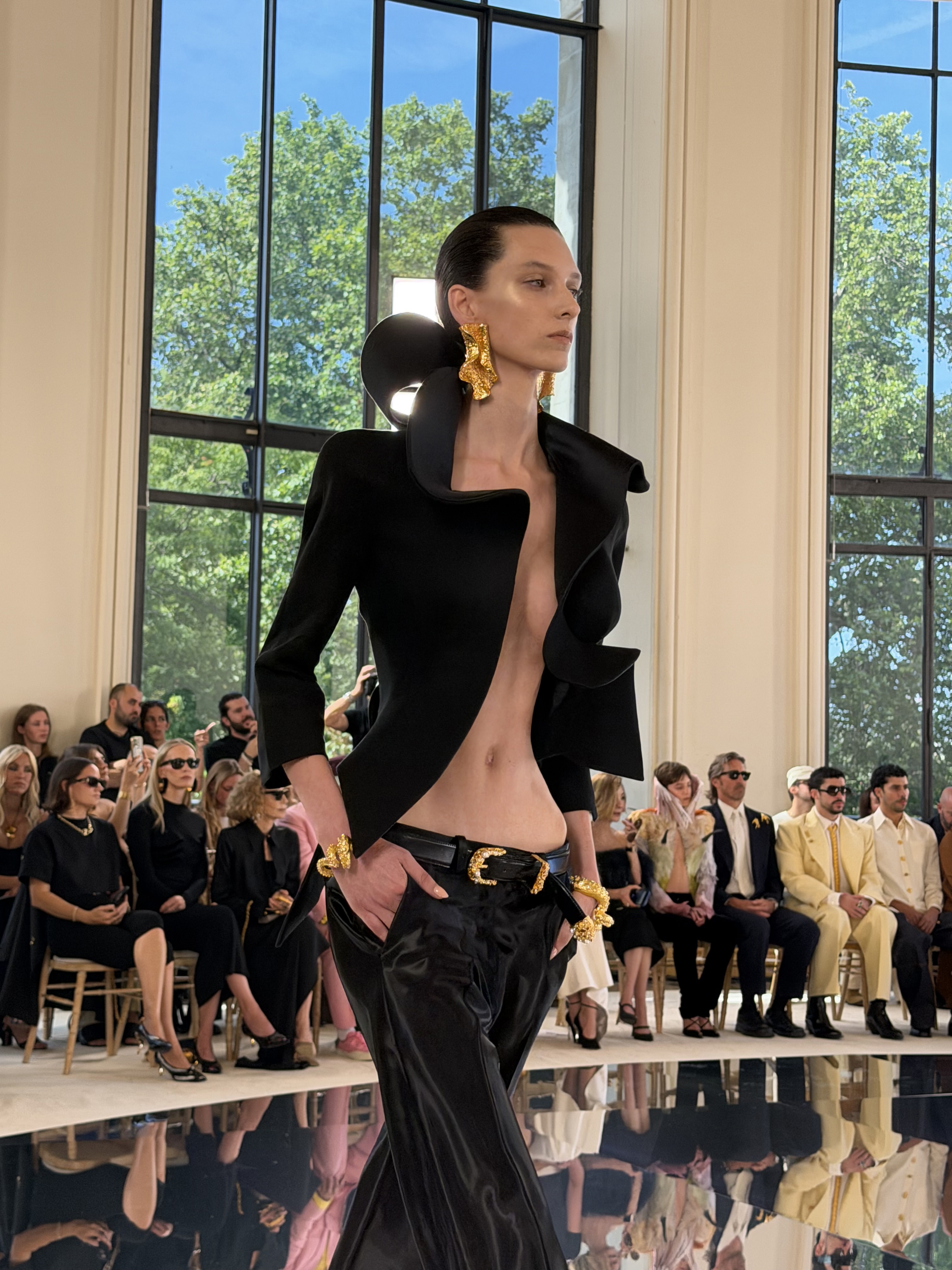
Abiola Olusola Tori Dress

Abiola Olusola

Abiola Adeniran, founder and creative director of Abiola Olusola 

Q: How do you decide which traditional techniques are "essential" to keep in your collections versus which elements to evolve for a contemporary, minimalist aesthetic?

A: Every collection begins with research. I'm inspired by people, films, history and the stories I want to tell at that particular moment. My research guides my creative decisions and helps me determine which traditional fabrics and techniques best communicate the narrative. From there, I decide what kind of contemporary interpretation the collection needs. If I'm looking for something softer, more fluid or graphic, I might work with Adire on silk or linen. If the story calls for something more sculptural or dramatic, I'll collaborate with our local weavers to develop bespoke textiles that bring those ideas to life.

Q: I especially love your tie-dye and print fabrics. How do you choose these techniques within your collections?

A: I usually choose the colours based on the palette that emerges from my research and mood board, while the dyeing or wax-resist techniques are selected to reflect the spirit of the collection itself. In one of my recent collections, I wanted to illustrate playful fairy-like figures inspired by Yoruba folklore, and Adire was the perfect medium to bring those dreamlike visuals to life. It allowed us to create prints in a way that felt both expressive and deeply rooted in Nigerian craftsmanship.

Q: You've showcased at international fashion weeks in Paris and Portugal, but what does the opportunity at Harrods represent for your vision of African luxury alongside Brand63Africa?

A: It's an incredible opportunity to demonstrate that fashion from Africa is global fashion and belongs alongside the world's leading luxury brands. Harrods is one of the most recognised luxury retailers in the world, so being part of this platform helps challenge outdated perceptions and celebrate the craftsmanship, creativity and innovation coming from the continent. Through Brand63Africa, it also shines a spotlight on independent African designers. I hope it creates more visibility and opens doors for many more designers to follow, helping build lasting bridges between African fashion and the global luxury industry.

Q: Having graduated from Instituto Marangoni and now based in Lagos, what is one must-visit spot in the Lagos design scene that captures the future of the city's fashion industry?

A: I recommend the JK Randle Centre for Yoruba Culture on Lagos Island. The architecture is beautiful, the colours capture the vibrancy of Nigeria, and it features Nigerian fashion as part of its permanent exhibitions. It's inspiring, rich in history and one of my favourite places for photoshoots. And I'd recommend visiting any local food spots for some pounded yam and egusi or edikaikong. 

Namnyak Odupoy, founder and designer at Studio Namnyak

Q: Your brand is unique in its fusion of traditional Kenyan craftsmanship with innovative digital design and 3D technology. How do you navigate the potential friction between high-tech processes and slow-fashion artisanal production?

A: The tension between technology and craft is real, but for us it’s also generative. As a small business, we face very real limitations: time, cost, and capacity. Integrating digital tools becomes a way to solve challenges that would otherwise slow us down or stretch our resources. It’s not about replacing human skill, but instead about creating space for it. We work with artisan communities whose processes are inherently slow, intentional and rooted in cultural knowledge. Introducing 3D design and digital prototyping expands the space in which their work can exist. Technology allows us to experiment, refine silhouettes and reduce waste long before we touch a physical material. It frees artisans to focus on the parts of the process that require human intuition: dyeing, weaving, pleating, sculpting. So instead of friction, we have a dialogue where innovation protects tradition by making it more adaptable, more visible, and more globally competitive.

Q: Moving from small, thoughtful capsule collections to a dedicated space at Harrods is a significant evolution. What do you want to take away from this pop-up in September in terms of a lasting, global perception of contemporary Kenyan design?

A: This is a huge milestone for us, and it’s also a statement. I want people to walk away with a clear understanding that contemporary Kenyan design is not a niche; it’s a sophisticated, future-facing design language with its own aesthetic. I want to challenge long-held perceptions of African fashion: what it looks like, how it’s made, and the narrow lens through which it’s often viewed. The pop-up is an opportunity to show that African craft can sit confidently within global luxury without being flattened into “ethnic inspiration.” I hope that visitors see us as part of a broader movement of designers from the continent shaping new narratives, new materials, and new forms of cultural expression. If they leave with curiosity, respect, and a recognition of Kenya as a site of innovation, not just heritage, that will be the lasting impact.

Q: Given your focus on "conscious global consumption," what is one specific resource or practice you recommend to other designers who are trying to successfully integrate ethical production with modern technology?

A: Building transparent, long-term relationships with makers and suppliers and pairing that with digital tools that make those relationships more efficient and equitable. Digital sampling and 3D prototyping can drastically reduce waste, travel, and unnecessary iterations, but the real value comes when these tools are used to support artisans rather than bypass them. When designers share timelines, costs, and expectations openly, by using technology to streamline and not to replace human craft, ethical production becomes scalable. Conscious global consumption isn’t just about materials! It’s about systems, and the most sustainable systems are the ones where technology enhances human skill rather than erasing it.

Namnyak Odupoy Studio Namnyak

Namnyak Odupoy