Female Founded | Aug 27, 2025
Female Founded: Fara Homidi
Female Founded | Sept 10, 2025
Female Founded: Saie
Female Founded | Oct 10, 2024
Female Founded: Otiumberg
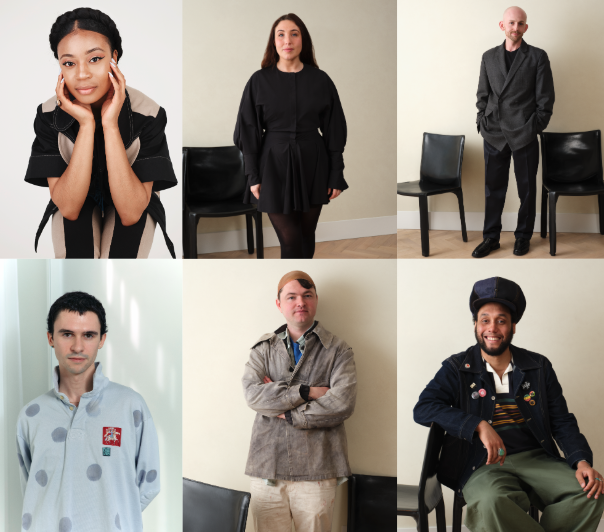

Female Founded: La Bonne Brosse
The cult French hairbrush brand bringing ritual back to beauty
Founded by beauty-industry veterans Pauline Laurent and Flore des Robert, La Bonne Brosse has transformed an everyday object into a coveted luxury accessory.
In an industry obsessed with the next launch, La Bonne Brosse is making a case for something altogether less fleeting: the humble hairbrush. Founded in 2021 by longtime friends and beauty industry veterans Pauline Laurent and Flore des Robert, the French brand has built a cult following by reimagining an everyday object as both a high-performance tool and an object of desire.
Drawing on decades of experience at some of the world's biggest beauty companies, the pair set out to restore the hairbrush to its former glory, a beautifully crafted essential rooted in ritual rather than consumption. The result is a collection of French-made brushes designed to address different hair and scalp needs, championing a more personalised approach to haircare while encouraging a slower, more intentional beauty routine.
As La Bonne Brosse continues to expand from its signature brushes into haircare, we spoke to co-founder Flore des Robert about building a business with your best friend, disrupting an overlooked category, and why sometimes the most innovative beauty products are the ones that have been hiding in plain sight all along.
You've both spent years inside some of the world's biggest beauty businesses. Was there a particular moment when you realised you wanted to start your own brand and why?
Sometimes one person has the idea, the other has the desire, and then magic happens. I think it was really Pauline's desire to start our own project more than mine, because I was very happy where I was. But I think what really made us change our perspective and start our entrepreneurial journey was turning 40. Some might call it a midlife crisis, but it was also 2020, the year of COVID, and I think that sped things up. We were both in our apartments, dealing with huge workloads in our corporate jobs. Pauline was calling me every other day, saying, “OK, we have to get through this, but let's make ourselves a promise: when it's done, we'll do something different.”
We've been friends for 20 years. She knew it was the right time for us, even if we didn't yet know what that something would be. At the end of COVID, I vividly remember having coffee together. She said, “I know we need to do something, but I don't really know what.” And I said, “Well, there's this idea I've had in my mind for three or four years. There's one product in the bathroom that hasn't been disrupted, even though everyone uses it every day: the hairbrush. There's a whole audience to educate on why it's important.” She listened, went home, and came back a week later saying, “You know what? I think this idea has legs.” She said, “OK, hold my hand. We're going to jump together. Let's do this.”


Friendship and business can be a complicated combination. How has your relationship evolved since launching La Bonne Brosse?
Massively. It's interesting because I think having a business partner is a one-of-a-kind relationship. We've been friends for more than 20 years, and from the beginning, we knew exactly what the other was very good at. We've always been very respectful of that. She's the creative one, always thinking about what's going to be cool and what the next big idea is. I'm the one making that idea big and beautiful. The combination creates magic if you trust each other. I've had colleagues that I loved, but I wasn't spending my life with them, and I wasn't building a business with them. We still love each other very, very much, which I think is the requirment of a good business-partner relationship. But it's true that now, and she would agree with this 100%, we are business partners more than we are friends.
It's not that we love each other any less. It's just that we spend our lives working on this business together. We might go for a drink in the evening, but we don't have dinners together as much as we used to because we're working all the time. The friendship we had has evolved into a very strong working relationship. It's amazing because we are each other's best business partners, and that's beautiful. The only drawback is that the lighter side of our friendship has been replaced by that. We even used to go on holiday together, but now the last thing we want is to go on holiday together!
You've spoken about transforming an everyday object into a beauty accessory. What was missing from the conversation around hairbrushes before La Bonne Brosse?
Over the years, the hairbrush has become a commodity product. But when you think about our grandmothers, they had beautiful brushes made from silver, ivory or tortoiseshell. They kept them in their bathrooms and they were real objects of desire. I think that changed with the development of the hair industry. Suddenly, the focus shifted to products, colouring, masks, hairspray and treatments, and the brush was no longer considered important. It fell off its pedestal and became something purely functional.
What we wanted to do with La Bonne Brosse was put it back where it belongs. The reason it was such a beautiful object for our grandmothers is that they understood how important it was in a haircare routine. It deserved to be extremely high quality. It was also something deeply personal that you touched every day, so it had to be beautiful. Our mission was to take this everyday object and transform it into something more like functional luxury: a luxurious tool that is both useful and beautiful. In many ways, it's about taking something from the past and making it feel contemporary again.
I think that knowledge has also been lost over time. My grandmother taught me the importance of a good brush, but my mother belonged to a generation where products mattered more than gestures and tools. It's unfortunate because, at the end of the day, one of the best things you can do is invest in a quality tool to take care of yourself, rather than simply buying more products.
Consumers today understand that skincare should be personalised. Why do you think hair care has taken longer to embrace that same level of individuality?
I think there are a few reasons. First of all, haircare is still a category that lacks education. Today, people know how to do a smoky eye or double-cleanse their skin because there is so much education around makeup and skincare. When it comes to hair, most of the education is about styling. But when it comes to really taking care of your scalp and hair, very few people are talking about it.
On top of that, hairbrushes had become a one-size-fits-all product. Most people would just buy a brush in the supermarket without knowing what it was made of, whether it had boar bristles or nylon bristles, or what difference those materials actually make.
I think that's why the brushing ritual has been lost. No one is telling that story anymore. The most important thing you can do for your scalp and hair is brush it with a good-quality tool, but the industry has traditionally focused on selling shampoos, conditioners, masks and sprays. A hairbrush is different because it's something you buy for years, sometimes for life.
People thought we were crazy when we left our jobs to build a business around hairbrushes. They said, “You're going to build a business on one consumer per lifetime?” But for us, it was about being fair to the consumer and giving them the right tool to properly care for their scalp and hair.
And today's consumer is not our grandmother's consumer. People have curly hair, afro hair, sensitive scalps and very different needs. That's why personalisation has always been at the heart of the brand. We wanted to make sure we were putting the right brush in the right person's hands, because when you do that, the effect on the health and beauty of the hair and scalp is immediate.
Hair is such a personal thing. How much did that emotional relationship with hair inform the way you designed the brushes?
That's really Pauline's area. From the beginning, she said it couldn't look like your grandmother's brush. It had to be desirable, joyful, a little bit sexy and collectible.
She often talked about the Hermès lipstick. Of course, nobody needs a Hermès lipstick, but people want it because it's beautiful, and using it makes them feel good. We felt the same should be true of a hairbrush. If you surround yourself with beautiful objects and bring intention to everyday rituals, they can trigger joy and excitement. Suddenly, brushing your hair becomes a small luxury, and the gesture feels completely different.


One of the most interesting things about La Bonne Brosse is that it asks people to slow down. In an industry built around speed, novelty and constant launches, how radical is the idea of encouraging consumers to spend more time with a single object?
Part of the reason we started our own company was that we were fed up with that cycle. We both worked for brands where there was always the summer launch, the holiday collection, the Mother's Day edition. For us, brushing your hair belongs to a kind of slow beauty movement because it's a moment of reconnection with yourself. You're standing in front of the mirror, spending maybe 45 seconds brushing your hair, without your phone in your hand. It's a small pause in the day.
I think that's one of the reasons people love the product so much. Yes, it works, but it's also about that moment. You don't feel part of an era of consumption; you feel part of an era of self-reflection.
You’ve also launched the Cair range. There are countless haircare products on the market. What did you feel was genuinely missing from the category?
If I showed you my first pitch deck, Cair was already there. Pauline felt that, of all the beauty categories, hair was perhaps the least disrupted. The same types of products have existed for years, and people generally don’t put the same thought into the shampoo they buy as they do into the face cream they buy. Even at the luxury end of the market, many formulas aren’t truly exceptional.
She believed there was an opportunity to create something genuinely luxurious, sensorial and technologically advanced. We started with the brush because we saw it as our Trojan horse. The formulas themselves are extremely scientific, which is why they took two years to develop. You need the right ingredients, the right technology and the right innovation to create a shampoo without silicones and fatty agents, but with ingredients such as rice water, hyaluronic acid and niacinamide.
What have been some of the most rewarding and challenging aspects of leading La Bonne Brosse since its inception?
One of the challenges was that entrepreneurship is still a very masculine place. We had meetings with investors and the moment we started talking about the brand, they would say, “I'll talk to my wife about it.” And we were thinking, no, we're building a strong platform that can disrupt the industry. We're here for the long run.
We felt it wasn't really the right audience for us, so we decided to raise funds only from women. We gathered a group of 30 friends and family members: some worked in banks, law firms, consulting companies and cosmetics companies. We felt this was a unique opportunity for them, and for us, to build a beautiful feminine project together.
It was one of the hardest things when we started, but in the end, it became one of our best surprises: they all said yes. They all invested in the company, and I think they'll be very happy with the return on their investment.
We managed to turn one of our biggest challenges into one of the most beautiful stories of the brand. Today, we have 30 powerful women alongside us, and they are really our best ambassadors.
For women interested in starting their own brand, what advice would you give based on your experiences?
I have huge respect for solopreneurs because it's very, very hard. For us, being two has been much more of a blessing than a curse. I know people think it must be difficult to have two strong, opinionated women leading a brand, because we are both very strong-minded. But at the end of the day, the most beautiful gift has been that doing it with a friend unlocks each other's potential.
So for someone who isn't sure if she's ready to get started, maybe there's someone next to you who has the same desire. I would never have become an entrepreneur by myself. I think the only reason I decided to do it was because Pauline kept tapping me on the shoulder.
Apart from that, it's not as complicated as it seems when you're on the other side. When you're in the corporate world and thinking about launching your own business, you make a huge mountain out of it.
So my advice would be: just start. It's not as complex as it seems. There will be ups and downs, and moments when you don't sleep at night, but that journey towards freedom and independence, something I don't think you can find in the corporate world, is the most beautiful gift my professional life has given me so far.
What's next for La Bonne Brosse? What can our readers look forward to?
So what's next? Reaching more women around the world. We want this to remain a woman-to-woman conversation. Yes, we're hot on social media, but what's most important to us is that every person who owns a La Bonne Brosse continues to talk about it positively. We're really here for the next 50 years. We want to make the brush as iconic as Terracotta from Guerlain or Rouge Noir from Chanel.
Discover La Bonne Brosse HERE
